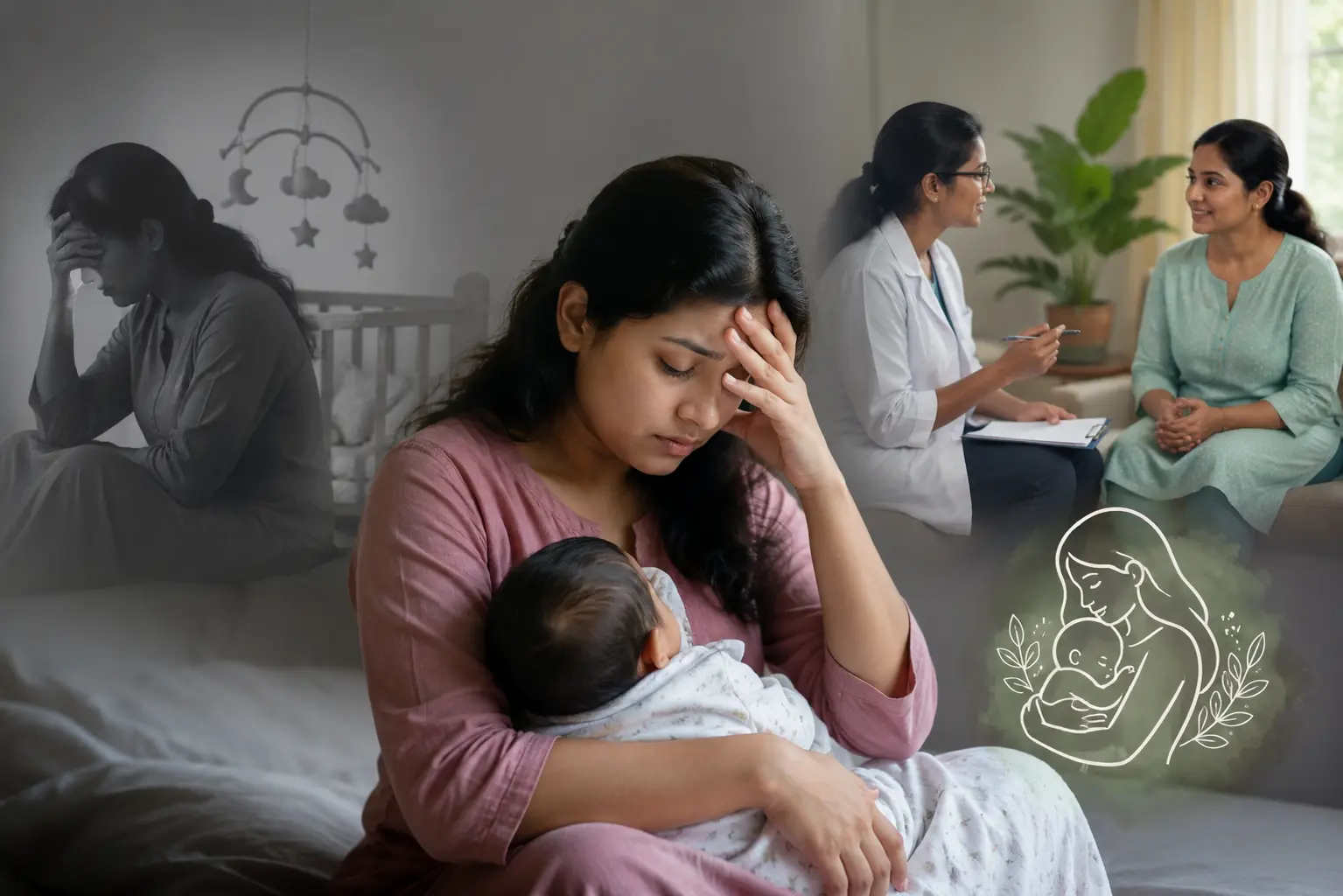
Bringing a new life into the world is often described as one of the happiest experiences a woman can have — yet for many new mothers, it's accompanied by overwhelming sadness, anxiety, or exhaustion that goes far beyond typical "baby blues." Postpartum depression is a real, treatable medical condition, not a personal failing or a lack of love for the baby. This blog covers the signs, symptoms, and available women's mental health treatment in Kerala, so mothers and families know when — and where — to seek help.
What Is Postpartum Depression?
Postpartum depression (PPD) is a mood disorder that can affect women after childbirth. Unlike the "baby blues" — a milder, short-lived period of tearfulness and mood swings that resolves within a couple of weeks — postpartum depression is more intense, longer-lasting, and can significantly interfere with a mother's ability to care for herself and her baby.
According to the World Health Organization, maternal mental health conditions like postpartum depression affect a significant proportion of women worldwide, making them one of the most common complications of childbirth.
Signs and Symptoms of Postpartum Depression
Symptoms can appear within the first few weeks after delivery, though they sometimes develop gradually over the following months. Common signs include:
- Persistent sadness, hopelessness, or emptiness
- Severe mood swings or excessive crying
- Difficulty bonding with the baby
- Withdrawing from family and friends
- Loss of appetite or eating much more than usual
- Insomnia or sleeping far more than needed
- Overwhelming fatigue or loss of energy
- Intense irritability and anger
- Fear of not being a "good enough" mother
- Feelings of worthlessness, shame, or guilt
- Reduced ability to think clearly, concentrate, or make decisions
- Recurrent thoughts of death, self-harm, or harming the baby
If thoughts of self-harm or harming the baby occur, this is a medical emergency and requires immediate professional attention — not something to wait out or manage alone.
Why Postpartum Depression Happens
Postpartum depression isn't caused by anything a mother does or doesn't do. It results from a combination of factors, including:
- Hormonal shifts — a rapid drop in estrogen and progesterone after childbirth can significantly affect mood.
- Sleep deprivation — the physical and emotional toll of disrupted sleep can intensify depressive symptoms.
- Psychological adjustment — adapting to a new identity as a mother, along with changes in body image and routine, can be overwhelming.
- Personal or family history — women with a prior history of depression, anxiety, or PMDD are at higher risk.
- Lack of support — limited family, social, or partner support can worsen emotional strain during this period.
Postpartum Depression vs Baby Blues vs Postpartum Psychosis
It's important to distinguish between these related but different experiences:
- Baby blues: Mild mood swings and tearfulness, usually resolving within two weeks without treatment.
- Postpartum depression: More intense, persistent symptoms lasting beyond two weeks, requiring clinical treatment.
- Postpartum psychosis: A rare but serious condition involving confusion, hallucinations, or delusions — considered a psychiatric emergency requiring immediate hospital care.
Treatment Options for Postpartum Depression
The good news is that postpartum depression is highly treatable. As part of comprehensive women's mental health treatment in Kerala, effective options typically include:
- Psychotherapy — approaches like Cognitive Behavioural Therapy (CBT) help mothers process difficult emotions and develop healthy coping strategies.
- Medication — antidepressants may be prescribed when appropriate, with careful consideration for breastfeeding mothers under psychiatric supervision.
- Support groups — connecting with other mothers experiencing similar struggles can reduce isolation and shame.
- Family involvement — educating partners and family members helps create a supportive home environment during recovery.
- Lifestyle support — guidance on sleep, nutrition, and gradual return to routine as part of a holistic recovery plan.
How VRC Hospital, Vettom Supports New Mothers
VRC Hospital, Vettom offers confidential, compassionate women's mental health treatment in Kerala, with a team experienced in maternal and perinatal mental health. Our approach includes:
- Thorough psychiatric evaluation tailored to postpartum and perinatal concerns
- A private, judgment-free space for mothers to speak openly
- Individualised treatment plans balancing therapy, medication, and family support
- Guidance for partners and family members on how to help during recovery
- Ongoing follow-up care to track progress through the postpartum period
When to Seek Help
If symptoms of low mood, anxiety, or difficulty bonding with your baby last longer than two weeks, or interfere with your ability to function, it's time to speak with a mental health professional. Don't wait for things to "get better on their own" — early treatment leads to faster, fuller recovery, and the earlier support begins, the sooner both mother and baby benefit.
Conclusion
Postpartum depression is common, treatable, and nothing to be ashamed of. Recognizing the signs early and seeking the right support can make all the difference for a mother's wellbeing and her relationship with her baby.
If you or someone you know is struggling after childbirth, VRC Hospital, Vettom provides expert, confidential women's mental health treatment in Kerala, helping mothers navigate recovery with dignity and care.
If you are having thoughts of harming yourself or your baby, please seek emergency medical help immediately. You are not alone, and support is available.